




Date
April 14, 2020
About This Project
3D Scan Survey of Mural Paintings and Inter-column Paintings in Daeungjeon Hall of Bulgapsa Temple, Yeonggwang
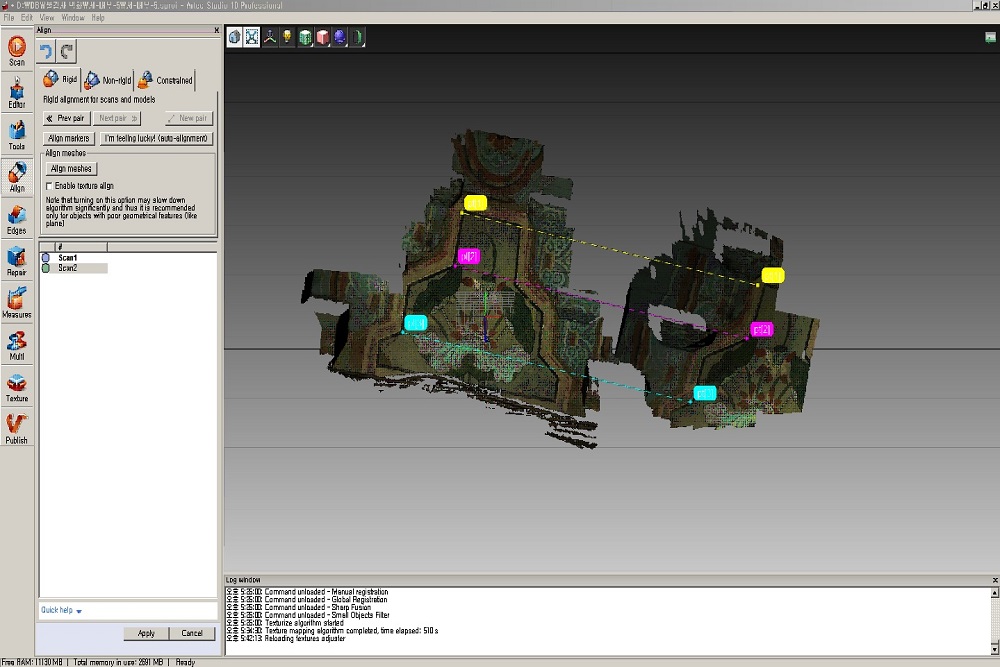
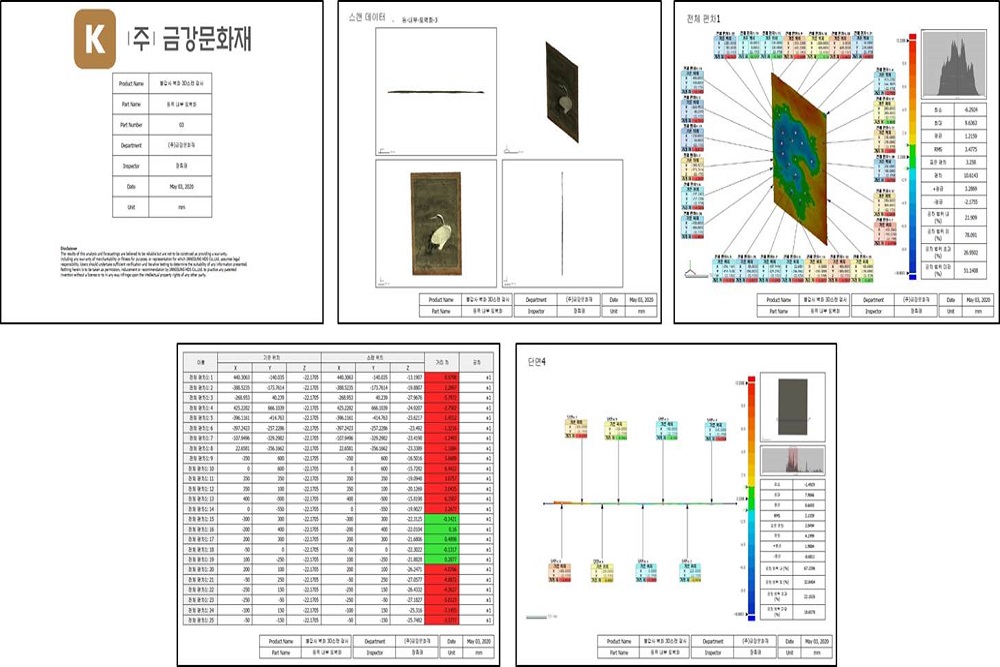
JANGSUNG HDS is located in Yeonggwang-gun, Jeollanam-do A project to investigate the shape and displacement state of murals by performing high-precision 3D scanning on the wall paintings and earthen wall paintings of Bulgapsa Temple's Daeungjeon Hallwas performed.
Bulgapsa Temple is a branch temple of Baegyangsa, the head temple of the 18th parish of the Jogye Order of Korean Buddhism, and within its grounds are architectural styles preserved from the mid-Joseon dynasty onward. Bulgapsa Daeungjeon Hall (Treasure)including the Palsangjeon Hall, Chilsonggak Pavilion, Ilgwangdang Hall, Myeongbujeon Hall, Manru Pavilion, and Beomjongnu Pavilion, as well as various other cultural heritage sites.
In this project, we are focusing on the Daeungjeon Hall of Bulgapsa Temple 3D scanning 77 brick and earth murals to record the actual shape of the mural surfaces as 3D data and investigating their displacement statusDone.
Precise mural recording using non-contact 3D scanning
It is important to minimize physical contact with the objects even during the process of investigating the preservation state of old temple murals and ceiling paintings.
3D scanning acquires the three-dimensional shape and position information of a surface as Point Cloud data without directly contacting the object.Because it can do so, it can be used for recording the current status and investigating the deformation of cultural heritage.
JANGSUNG HDS precisely scanned the mural paintings on the eaves and the earthen wall of Bulgapsa Temple's Daeungjeon Hall, building digital data of the surface topography and spatial information of each mural.
77-point displacement survey of mural paintings on fabric and earth walls
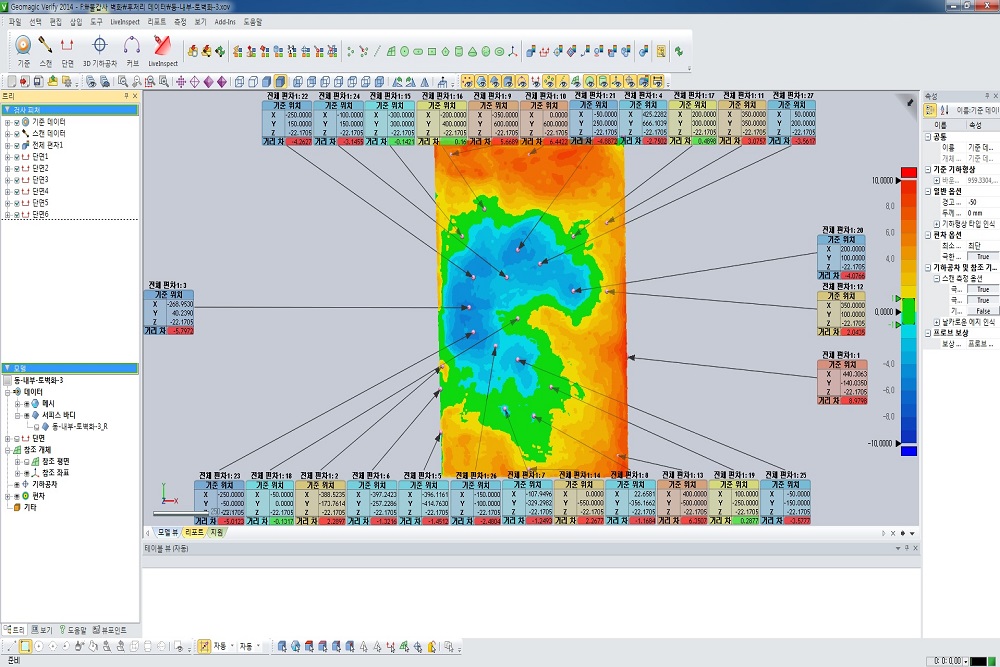
When determining the preservation state of a mural, not only the visibly identified cracks, but also Three-dimensional changes such as minor protrusions, depressions, and deformations on the wall surfacecan also be an important subject of investigation.
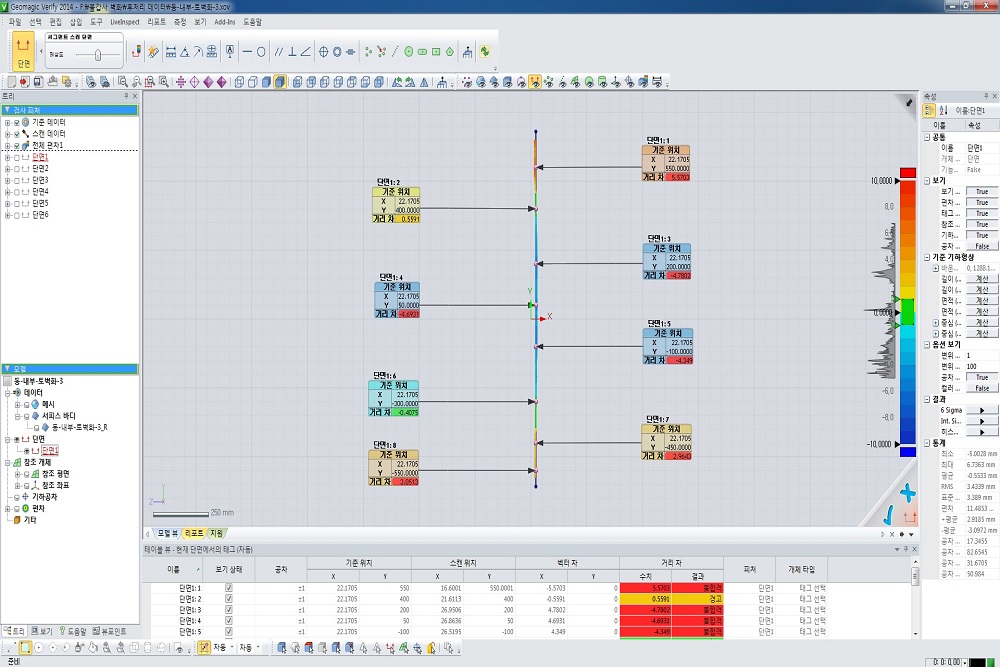
In this project, we used the acquired 3D scan data to record the current shape of the mural and established precise baseline data to review the displacement state of the mural's surface.
The main 3D scan data can be used for the following purposes.
- Current 3D shape recording of brick murals and earthen murals
- Investigation of displacement and deformation state of mural surface
- Basic data for identifying the location of cracks and damage
- Point Cloud-based Digital Recording of Cultural Heritage
- Comparison of time-series changes through future re-investigations
- Precise status data for establishing cultural heritage preservation and restoration plans
3D baseline data for comparing changes in cultural heritage
It is important to accurately record the current state of cultural heritage. Securing precise 3D data at a specific point in time allows the same object to be scanned again in the future to Compare historical data with current data and examine whether there are any changes in shape or displacement.You can do it.
Particularly when a large number of murals must be managed over a long period, constructing their respective locations and shapes as three-dimensional coordinate data can be utilized as baseline data for continuously managing the conservation status of cultural heritage.
Precision 3D scan of cultural heritage, temples, and murals
JANGSUNG HDS on historic buildings and murals such as Bulgapsa Daeungjeon By applying non-contact 3D scanning technology, actual shapes and spatial information are built into precise digital data.Do.
of temples, murals, surrounding wall murals, stone cultural heritage, historical buildings, etc. Establishment of baseline data for cultural heritage 3D scanning, displacement investigation, point cloud generation, or long-term change monitoringPlease contact JANGSUNG HDS if this is needed.