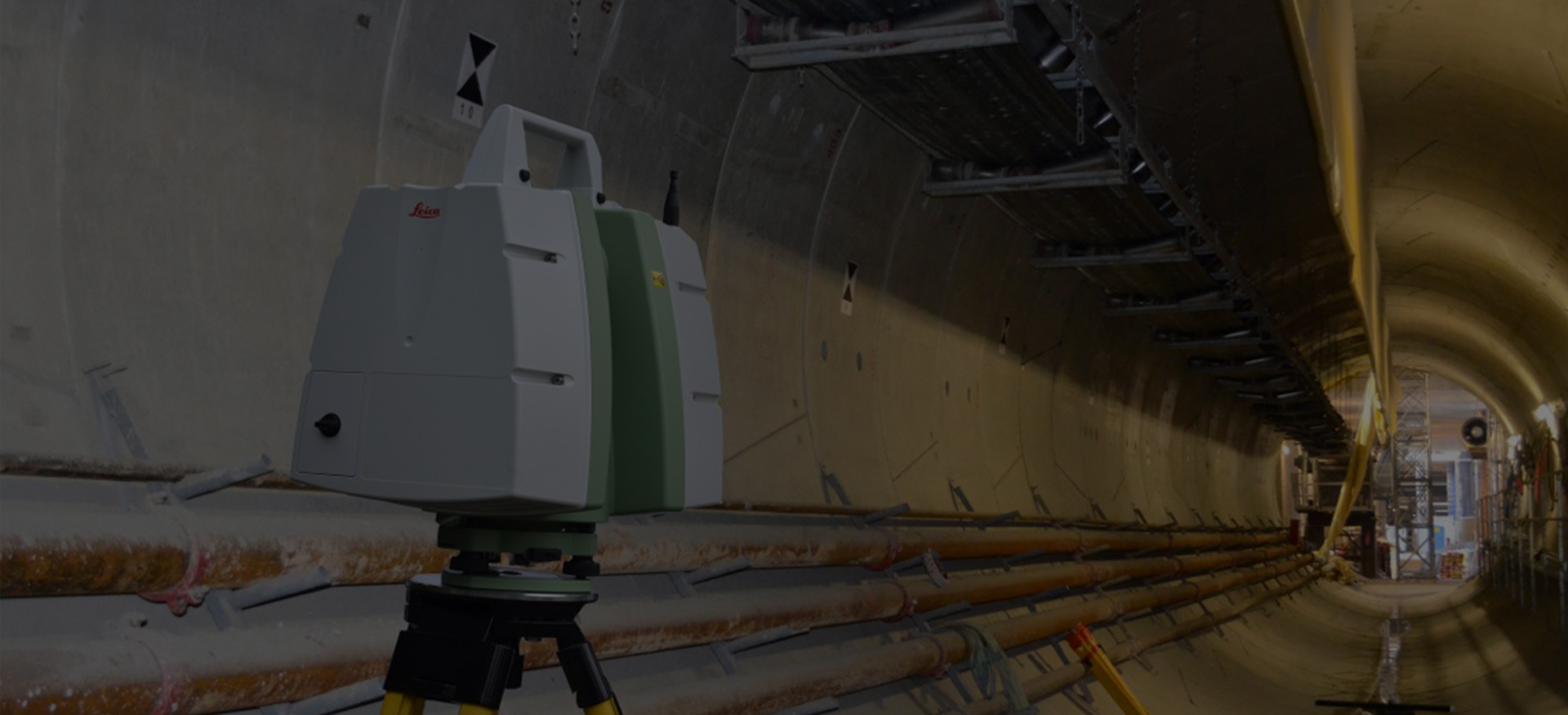
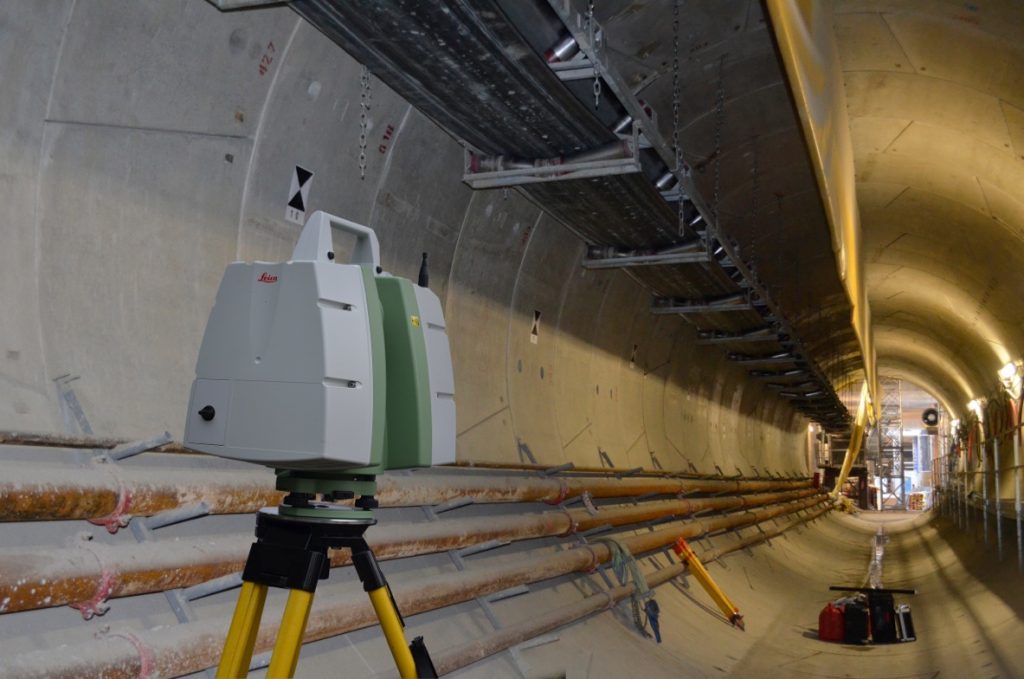
Tunnel 3D laser scanning and shape analysis
In tunnel construction and maintenance, obtaining accurate shape data of the excavation face and structures is crucial. 3D laser scanning precisely records the complex shapes inside tunnels in a non-contact manner, providing 3D spatial data that can be used for checking construction status, cross-sectional analysis, excavation volume calculation, and maintenance.
It is difficult to understand the overall shape of irregular rock excavation surfaces or tunnel structures solely through manual surveying of a few points. By building point cloud data of the entire tunnel using 3D scanning, cross-sections can be extracted at required locations even after field work is completed, and overbreak, underbreak, and shape deviations can be reviewed by comparing the design cross-section with the actual construction shape.
In addition, the shape and orientation of rock joints can be analyzed from 3D data and used as basic data for tunnel excavation and construction review. JANGSUNG HDS applies 3D scanning methods tailored to site conditions and project objectives, and registers and processes the acquired data to build precise spatial information that can be used for tunnel construction and maintenance.
3D laser scanning data can be utilized for various tunnel engineering tasks, such as tunnel cross-section and shape analysis, excavation and volume calculation, overbreak and underbreak review, shotcrete and reinforcement construction review, rock joint analysis, shape recording by construction stage, and the establishment of digital as-built data.