




Date
August 17, 2026
Category
NEWSAbout This Project
This project A case study of 3D scanning a physical slide product to acquire shape data, followed by 3D reverse engineering and 2D drawing production based on the scan data.is.
For products without original CAD data or design drawings, there is a limit to accurately identifying the exact shape and structure using only the physical object. In such cases 3D Scanning and Reverse Engineering By utilizing technology, complex physical shapes can be captured as digital data, which can then be used to create usable 3D CAD models and 2D drawings.
01. 3D scan of physical product
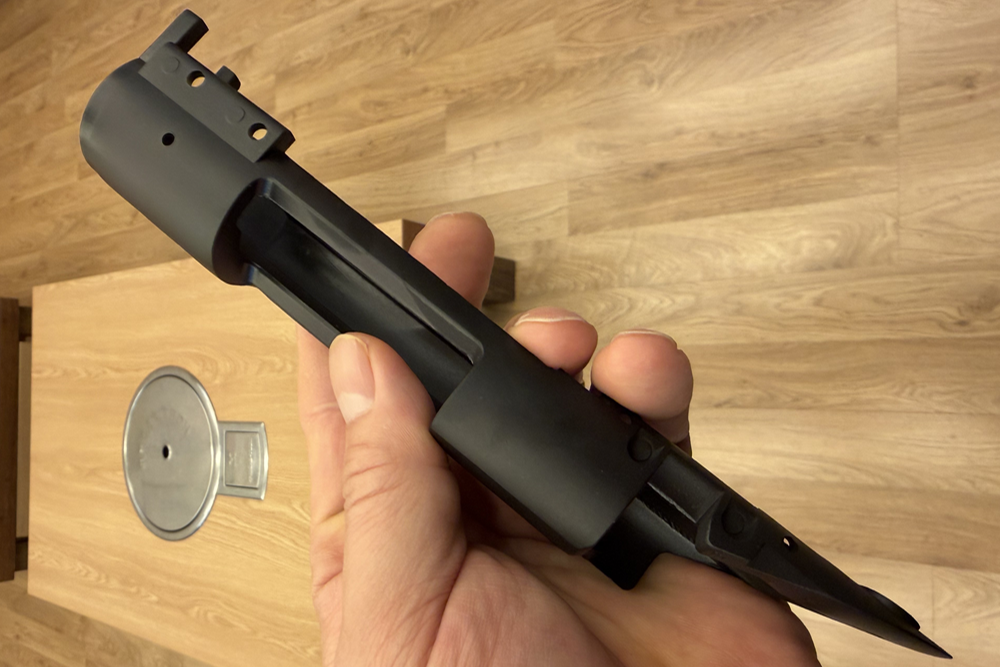
First, to secure the overall shape and detailed structure of the target product Precise 3D scanning using a 3D scannerwas conducted.
The target product is a long, slide-shaped component featuring various geometric elements such as multiple holes, ribs, steps, grooves, and fastening structures, in addition to external curved surfaces.
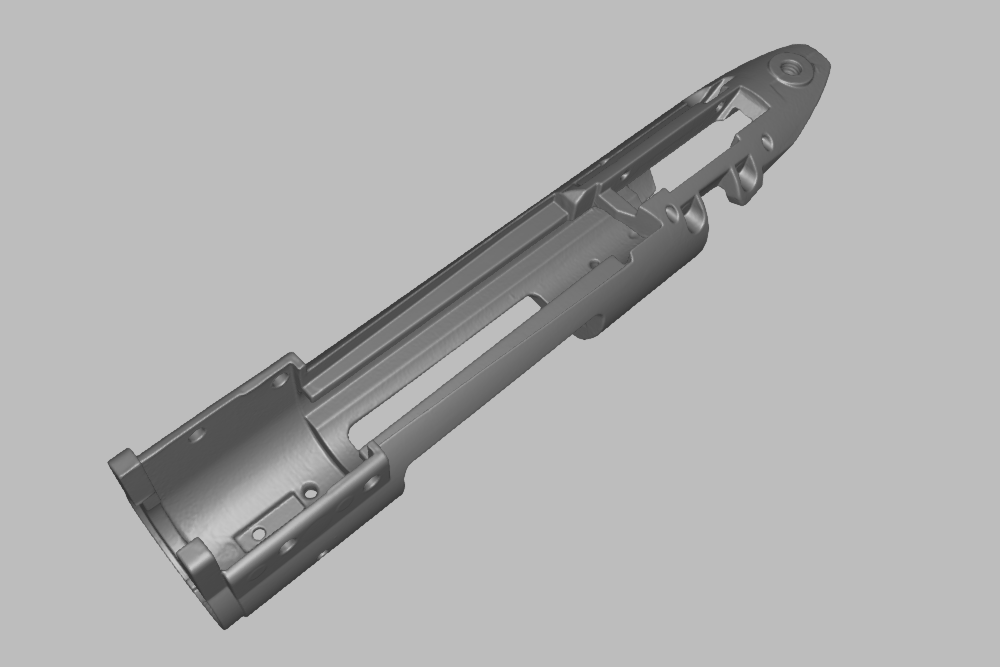
Through 3D scanning, these physical shapes were captured as 3D data, and the scan data was cleaned up for use in subsequent reverse engineering work.
Reverse Engineering Based on 3D Scan Data
Data acquired through 3D scanning does not automatically become CAD data for design.
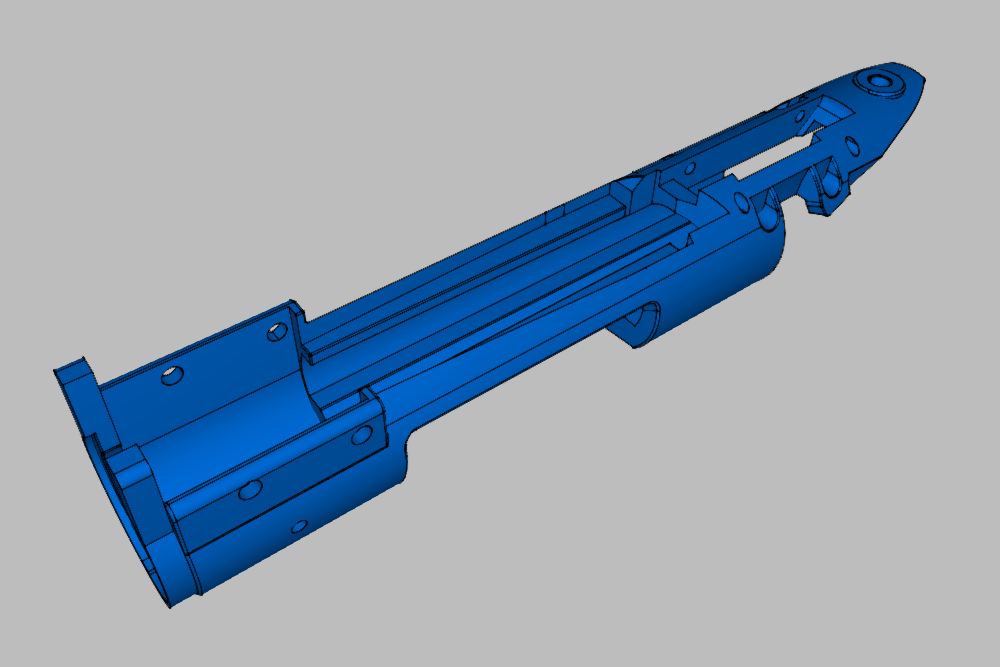
analyze the cylindrical parts, flat parts, curved surfaces, holes, slots, steps, and various structures of the product based on the actual shape of the scan data, Reverse engineering task to reconstruct into 3D CAD geometrywas conducted.
Rather than simply replicating the exterior appearance, we analyzed the positions and relationships of each shape based on scanned data of the actual object and modeled it in a format that can be utilized for future design and drafting work.
Through this, in a state where only physical products exist Editable and usable 3D CAD model datacan build.
03. 3D CAD model review and geometry cleanup
The reverse-engineered 3D model was reviewed for its overall appearance and major structures while comparing it with the scanned geometry.
Especially for parts like slide products that are long and have multiple structures arranged consecutively, it is difficult to reproduce the overall shape just by simple dimensional measurement, The process of modeling while checking the geometry and positional relationship based on 3D scan dataThis is important.
Through this process, we organized the data into 3D models suitable for use in manufacturing, design, and review.
04. Creation of 2D drawings based on reverse engineering data
Based on the completed 3D CAD data 2D production drawings and dimension drawingsI have written it.
to finally document the necessary projections, such as the front, side, and cross-section views of the product, along with its main shapes and dimensions, starting from the physical product 3D CAD data and 2D drawing databuilt with.
Work process
Physical product → 3D scan → Scan data cleanup → 3D reverse engineering → CAD modeling → Shape review → 2D drawing creation
When 3D scanning and reverse engineering are needed
Even for older parts, discontinued parts, prototypes, and existing products for which original design drawings or CAD data are unavailable, If the physical object exists, it can be converted into digital design data through 3D scanning and reverse engineering.You can do it.
JANGSUNG HDS is of the physical product From 3D scanning to reverse engineering, 3D CAD modeling, and 2D drafting We are proceeding in conjunction with it.
Products with complex curved surfaces or dimensions that are difficult to obtain with general measurement tools can also be analyzed using 3D scan data and converted into the necessary design data.
If you need 3D scanning, reverse engineering, 3D CAD modeling, or 2D drawing creation, please provide a photo of the target product or the purpose of the work, and we will review the feasibility and the appropriate method to proceed.